
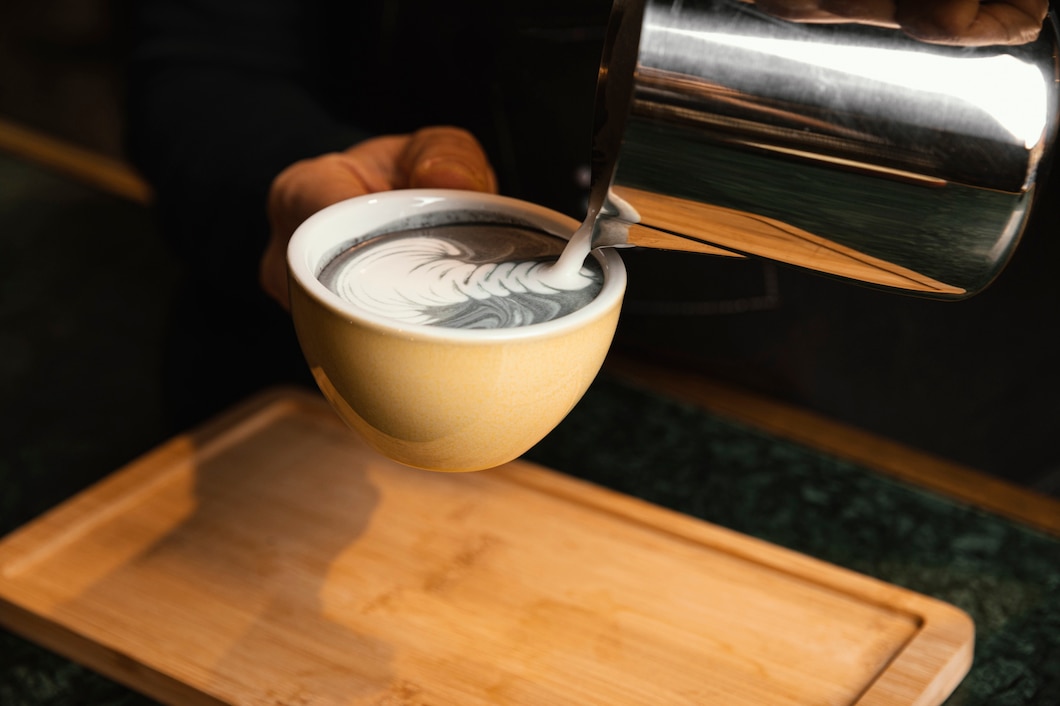
Brewing Coffee in Milk
Brewing Coffee in Milk: The first time I tried brewing coffee directly in milk instead of water, I didn’t expect much. I assumed it would just taste like a slightly creamier cup. But what I got instead was something richer, heavier, almost dessert-like—and honestly, a bit confusing. It made me question something I had always taken for granted: is water really the only “correct” base for coffee extraction?
Since then, I’ve experimented, failed a few times, and slowly understood the science and trade-offs behind brewing coffee in milk. It’s not just a quirky trick—it’s a method with its own logic, limitations, and surprisingly interesting results.
What Does It Mean to Brew Coffee in Milk?
Rethinking the role of liquid in extraction —
When I talk about brewing coffee in milk, I mean replacing water entirely with milk during the extraction process. Instead of pouring hot water over coffee grounds, I heat milk and use it as the solvent.
At a basic level, this changes everything. Water is a highly efficient solvent for extracting coffee compounds—acids, oils, sugars, and caffeine. Milk, however, is more complex. It contains about 87% water, but also fats (around 3–4% in whole milk), proteins, and lactose sugar.
This composition alters extraction dynamics. The fats bind with certain flavor compounds, especially bitter ones, which can result in a smoother taste. At the same time, milk is less efficient than pure water, meaning extraction can be incomplete if not handled properly.
So brewing coffee in milk isn’t just a substitution—it’s a fundamentally different chemical process.
The Flavor Profile: Rich, Smooth, but Slightly Muted
Why milk changes how coffee tastes —
The most noticeable difference when I brew coffee in milk is the texture. It becomes thicker, almost velvety, with a natural sweetness from lactose.
Bitterness is significantly reduced. That’s because milk fats coat the palate and bind with bitter compounds, softening their impact. In fact, some studies suggest that dairy proteins like casein can interact with polyphenols in coffee, altering perceived bitterness.
However, there’s a trade-off. The complexity of coffee—especially subtle fruity or floral notes—tends to get muted. If I use a light roast with delicate acidity, those nuances often disappear.
In practical terms:
- Dark roasts work better because they already have bold, chocolatey notes.
- Light roasts can feel “lost” in milk.
So while the result is smoother, it’s not necessarily more complex. It’s a different experience entirely.
Can Milk Actually Extract Coffee Properly?
The science behind extraction efficiency —
This is where things get interesting. Technically, milk can extract coffee—but not as efficiently as water.
Optimal coffee extraction happens between 195°F and 205°F (90°C to 96°C). Milk, however, starts to scald around 180°F (82°C). If I push the temperature too high, the milk develops a burnt taste and proteins begin to denature.
This creates a limitation. I can’t reach the ideal extraction temperature without risking flavor damage.
As a result, brewing coffee in milk often leads to under-extraction. That means fewer soluble compounds are pulled from the coffee grounds, which can result in a flatter or slightly weak flavor if not adjusted.
To compensate, I usually:
- Use a finer grind
- Increase brewing time
- Use slightly more coffee than usual
Even then, it’s not identical to water-based extraction—it’s a compromise.
Best Methods for Brewing Coffee in Milk
What actually works in real kitchens
Not all brewing methods are suitable for milk. Through trial and error, I’ve found that some methods perform much better than others.
The most effective methods I’ve used are:
- French Press: This works surprisingly well. I heat milk gently, add coffee grounds, let it steep for about 4–5 minutes, then press. The immersion method compensates for lower extraction efficiency.
- Stovetop simmering: I combine milk and coffee grounds in a pot, heat slowly, and stir. This method gives strong flavor but requires careful temperature control to avoid scorching.
- Moka pot (with caution): Some people try this, but I personally avoid it. Milk can clog the system and create pressure issues, making it risky.
Drip coffee makers and espresso machines generally don’t handle milk well because they’re designed specifically for water flow and pressure dynamics.
Nutritional Impact: More Calories, More Satisfaction
How milk transforms the nutritional profile —
When I brew coffee in milk, I’m not just changing flavor—I’m significantly changing the nutritional content.
A standard cup of black coffee has about 2–5 calories. When I replace water with whole milk, that jumps to around 120–150 calories per cup, depending on the amount used.
Protein content also increases, usually around 6–8 grams per cup, along with fats and natural sugars (lactose).
From one perspective, this makes the drink more filling. I’ve found it can act almost like a light meal or snack. But from another perspective, it’s no longer a low-calorie beverage.
So whether this is a benefit or a drawback depends on personal goals.
Potential Downsides and Risks I’ve Encountered
What doesn’t always work as expected —
While the idea sounds appealing, brewing coffee in milk isn’t without problems.
One issue is scorching. Milk burns easily if heated too quickly or unevenly. Once that happens, the flavor is hard to fix.
Another challenge is cleanup. Milk residues stick more than water-based coffee, especially in filters or presses.
There’s also a subtle point about caffeine extraction. Since milk extracts less efficiently, the final drink may contain slightly less caffeine compared to water-brewed coffee using the same amount of grounds.
Here’s a small counterpoint: some people argue that brewing in milk is unnecessary because adding milk after brewing achieves a similar result. I partially agree. Adding milk post-brew preserves extraction quality while still softening flavor. However, brewing directly in milk creates a more integrated texture that you can’t fully replicate afterward.
When Brewing Coffee in Milk Actually Makes Sense
Situational value rather than universal method —
I don’t use this method every day. In fact, I see it as situational rather than standard.
It works best when I want:
- A dessert-like drink without adding sugar
- A smoother, less acidic coffee
- A richer texture without separate milk steaming
It’s particularly useful in colder weather, when I’m craving something warm and comforting rather than sharp and energizing.
But if I’m evaluating coffee quality or trying to appreciate origin flavors, I always go back to water-based brewing. Milk simply masks too much.
My Personal Take: Innovation or Overcomplication?
A balanced reflection with a bit of skepticism —
After experimenting with brewing coffee in milk, I’ve landed somewhere in the middle.
On one hand, it’s creative and genuinely produces a unique drink. It challenges the assumption that coffee must always be brewed with water.
On the other hand, I can’t ignore that it introduces complexity without always delivering proportional benefits. Temperature control becomes trickier, extraction is less efficient, and cleanup is more demanding.
If I’m being honest, I think brewing in milk is more of a niche technique than a practical everyday method. It’s something I enjoy occasionally, not something I rely on.
And maybe that’s the right way to see it—not as a replacement for traditional brewing, but as an alternative worth exploring when I want something different.
FAQs
- Can I brew coffee in milk instead of water?
Yes, but extraction is less efficient, and temperature control becomes more important. - Does coffee brewed in milk taste better?
It tastes smoother and creamier, but some flavor complexity may be lost. - What temperature should I use when brewing in milk?
I keep it below 180°F (82°C) to avoid scorching. - Is caffeine lower when brewing in milk?
Slightly, because milk extracts caffeine less efficiently than water. - Which coffee roast works best with milk brewing?
Dark roasts work best due to their stronger, more robust flavor.