
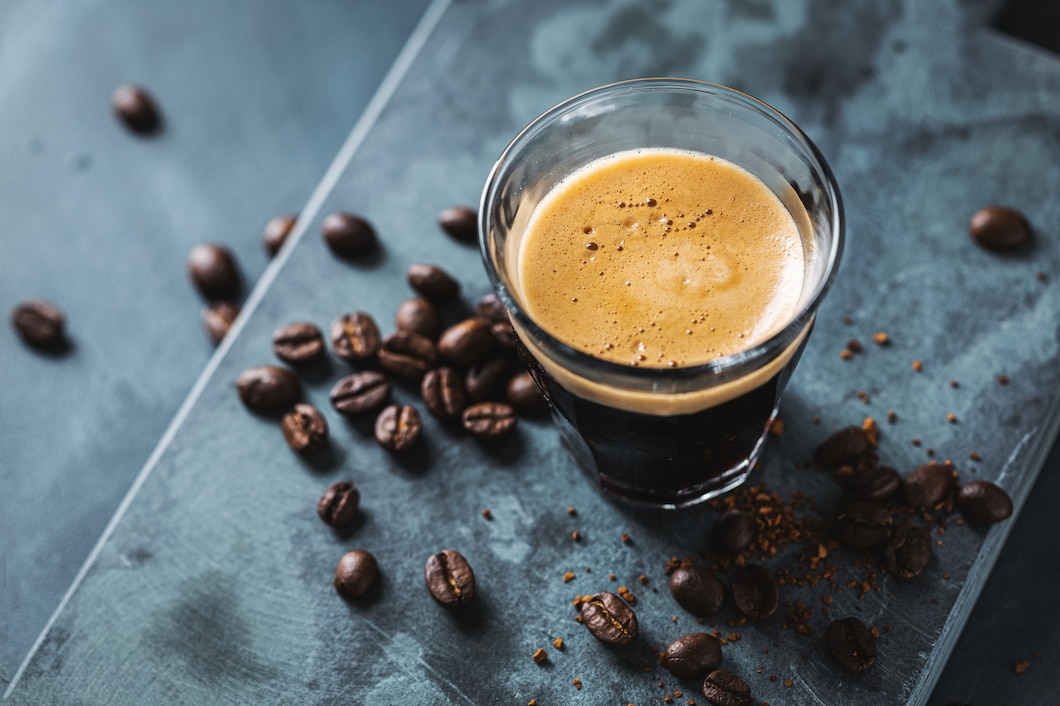
How To Make An Americano: The Simple Drink That Taught Me Precision Matters
Why My First Americano Tasted Flat Instead of Balanced
How To Make An Americano: The first time I made an Americano at home, I assumed it was nearly foolproof. Espresso plus hot water—it sounded too simple to mess up. But when I took my first sip, something felt off. It wasn’t bold like espresso, but it also lacked the smooth body of drip coffee. It just felt… diluted.
That moment made me pause. If such a simple drink could go wrong, then maybe it wasn’t as simple as it looked. Over time, I realized that an Americano is less about ingredients and more about ratios, technique, and subtle control. And once I started paying attention to those details, the difference became obvious.
1. What Is an Americano? Understanding the Basics First
A Drink Built on Balance
An Americano is made by combining espresso and hot water, typically resulting in a drink that resembles drip coffee in strength but retains espresso’s flavor complexity.
Standard Composition
- 1–2 shots of espresso (30–60 ml)
- 3–6 ounces of hot water (90–180 ml)
Why It Exists
Historically, the Americano was created to mimic the taste of brewed coffee using espresso machines.
A Subtle Insight
What surprised me is that an Americano isn’t just “weaker espresso.” It’s a different experience entirely—one that depends heavily on how the two elements interact.
2. The Ideal Ratio: How Much Water to Add
Common Ratios
I usually follow these guidelines:
- 1:2 ratio (espresso to water) for a stronger Americano
- 1:3 or 1:4 ratio for a smoother, lighter cup
Practical Example
If I use a double shot (60 ml espresso):
- Add 120–240 ml of water
Why Ratio Matters More Than Volume
The balance between espresso and water determines whether the drink feels rich or diluted.
A Personal Observation
I’ve found that small adjustments—just 20–30 ml of water—can noticeably change the taste. That level of sensitivity is easy to underestimate.
3. Water First or Espresso First? The Debate I Didn’t Expect
Two Common Methods
- Espresso poured over water
- Water poured over espresso
What I Noticed in Practice
Pouring espresso over water preserves the crema (the golden layer on top), while the reverse tends to break it.
Does It Affect Taste?
Technically, the difference is subtle. But visually and texturally, it matters more than I expected.
A Thoughtful Counterpoint
Some argue that the order doesn’t matter at all. I partially agree. The flavor difference is small, but the experience—especially presentation—does change.
4. Espresso Quality: The Foundation of a Good Americano
Why Espresso Matters Most
Since an Americano is mostly water, any flaw in the espresso becomes more noticeable.
Key Variables
- Extraction time: 25–30 seconds
- Grind size: fine but not overly tight
- Dose: 18–20 grams for a double shot
What Happens If It’s Off
- Under-extracted espresso: sour, thin
- Over-extracted espresso: bitter, harsh
A Lesson I Learned
An Americano doesn’t hide mistakes—it exposes them. That’s what makes it both simple and unforgiving.
5. Water Temperature: The Detail I Used to Ignore
Ideal Temperature Range
Water should be between 185°F and 200°F (85°C to 93°C).
Why Not Boiling Water?
Boiling water can flatten the flavor and destroy delicate notes in the espresso.
Why Temperature Matters More Than Expected
I used to pour freshly boiled water without thinking. But once I adjusted the temperature, the drink felt smoother and more balanced.
A Practical Insight
Letting water sit for 20–30 seconds after boiling often brings it into the ideal range.
6. Adjusting Strength Without Losing Balance
Stronger Americano
- Use less water or an extra espresso shot
Lighter Americano
- Increase water while keeping espresso constant
What I’ve Noticed Over Time
Adding more water doesn’t just dilute flavor—it changes how the coffee feels on the palate.
A Subtle Counterpoint
Some people treat an Americano like a customizable drink where anything goes. I think there’s a limit. Beyond a certain point, too much water turns it into something closer to flavored water than coffee.
7. Common Mistakes That Affect the Final Cup
Using Low-Quality Beans
The simplicity of an Americano makes bean quality more noticeable.
Incorrect Ratios
Too much water leads to a flat taste, while too little can feel overly intense.
Ignoring Extraction Quality
Bad espresso equals bad Americano—there’s no workaround.
A Realization Worth Sharing
I used to think simplicity meant fewer things could go wrong. In reality, it means every detail matters more.
8. Final Thoughts: A Simple Drink That Rewards Attention
Making an Americano isn’t complicated, but it’s precise. The core elements—espresso, water, and ratio—are straightforward, yet highly sensitive to small changes.
For me, the ideal version usually lands around a 1:3 ratio, with properly extracted espresso and water just below boiling temperature.
What stands out is how much control this drink offers. It’s simple enough to make quickly, but nuanced enough to refine over time.
And once I understood that balance, the Americano stopped feeling like a backup option. It became something intentional—something worth getting right.
FAQs
1. What is the standard ratio for an Americano?
Typically 1:2 to 1:4 espresso to water, depending on preference.
2. Should I add water before or after espresso?
Adding espresso to water helps preserve crema, but both methods work.
3. How much caffeine is in an Americano?
It depends on the number of espresso shots, usually 60–120 mg.
4. Can I use regular coffee instead of espresso?
No, an Americano specifically uses espresso as its base.
5. Why does my Americano taste bitter?
It may be due to over-extracted espresso or water that’s too hot.
6. Can I make an iced Americano?
Yes, by pouring espresso over cold water and ice.
7. Is an Americano stronger than drip coffee?
It can be similar in caffeine but often tastes more concentrated due to espresso.