
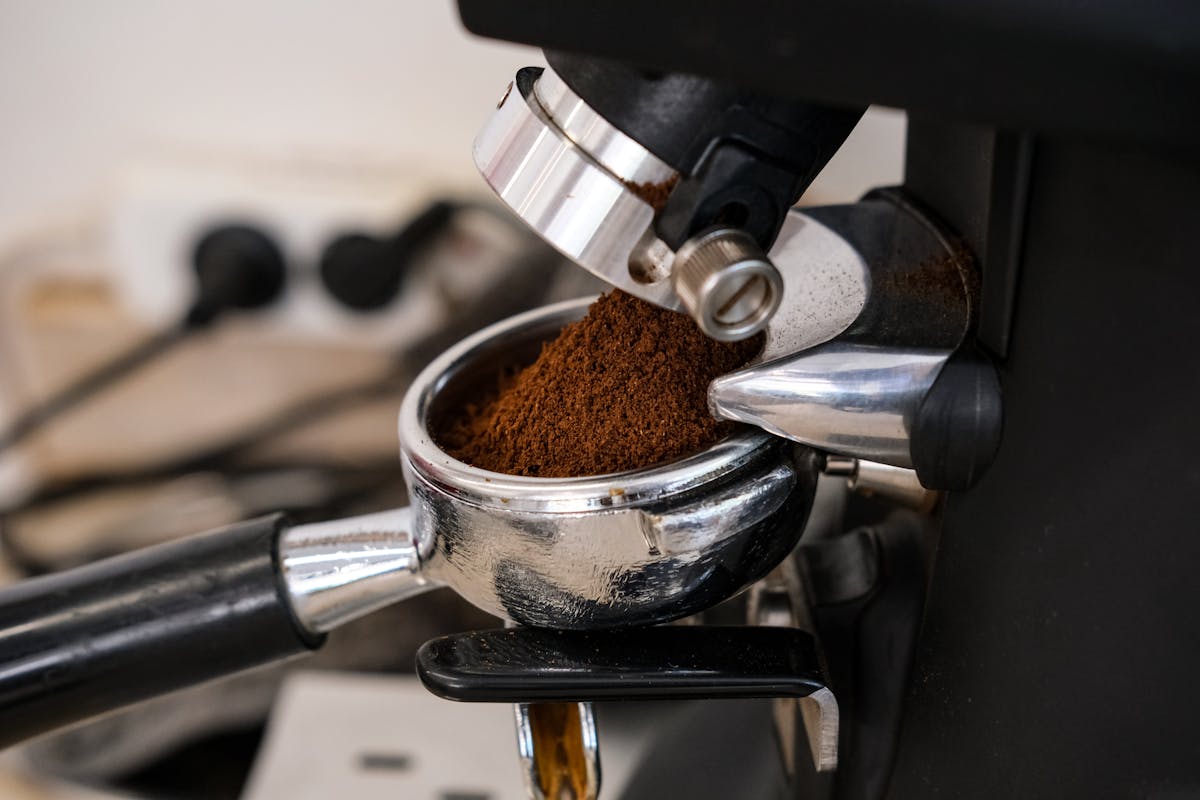
How to Grind Coffee Beans
How to Grind Coffee Beans: I used to think grinding coffee beans was just a small, forgettable step in the brewing process. Pour beans in, press a button, done. But the moment I started paying attention to grind size, consistency, and timing, everything changed. The same beans I once found average suddenly tasted brighter, sweeter, and more complex. That’s when I realized grinding isn’t just preparation—it’s the foundation of every good cup.
1. Why Grinding Coffee Beans Matters More Than I Expected
Extraction Starts Here
When I grind coffee, I’m essentially controlling how water interacts with the beans. Finer grounds expose more surface area, which speeds up extraction, while coarser grounds slow it down. This directly affects flavor balance.
Flavor Impact in Numbers
Research suggests that optimal extraction yields fall between 18% and 22%. Grind size plays a primary role in hitting that range. Too fine, and extraction can exceed 22%, leading to bitterness. Too coarse, and it drops below 18%, resulting in sourness.
A Subtle Contradiction
At first, I assumed finer grind always meant stronger coffee. But strength and extraction aren’t the same. A poorly extracted fine grind can taste worse than a well-extracted coarse one.
2. Understanding Grind Sizes (And When I Use Each One)
Extra Coarse (Like Sea Salt)
Best for cold brew. Steeping time: 12–24 hours.
Coarse (Like Kosher Salt)
Ideal for French press. Brew time: 4 minutes.
Medium (Like Sand)
Used for drip coffee makers. Brew time: 5–6 minutes.
Fine (Like Table Salt)
Perfect for espresso. Brew time: 20–30 seconds.
Extra Fine (Powder-like)
Used for Turkish coffee.
My Practical Insight
Matching grind size to brew method isn’t optional—it’s critical. Even small deviations can noticeably shift flavor.
3. Burr Grinder vs Blade Grinder: My Honest Comparison
Blade Grinder
- Inconsistent grind size
- Generates heat
- Lower cost (often $15–$40)
Burr Grinder
- Uniform particles
- Adjustable settings
- Higher cost (typically $80–$300+)
Performance Difference
Uniformity can improve extraction consistency by up to 20–30%, which directly impacts taste clarity.
A Slightly Controversial Take
While burr grinders are widely recommended, I’ve found blade grinders can still work for casual drinkers. The gap matters more as your expectations rise.
4. Step-by-Step: How I Grind Coffee Beans Properly
Step 1: Measure Beans First
I use about 1:15 coffee-to-water ratio (e.g., 20g coffee for 300ml water).
Step 2: Choose Grind Setting
Adjust based on brewing method.
Step 3: Grind Just Before Brewing
Fresh grinding preserves volatile compounds that evaporate within minutes.
Step 4: Check Consistency
I look for uniform particle size rather than perfection.
Step 5: Brew Immediately
Delay leads to flavor loss due to oxidation.
A Key Observation
Coffee begins losing aroma within 15 minutes of grinding. That short window makes freshness critical.
5. How Freshness Changes Everything
Degassing and Aroma Loss
After roasting, coffee releases CO₂. Once ground, this process accelerates rapidly.
Time-Based Quality Decline
- Within 5 minutes: peak aroma
- After 30 minutes: noticeable decline
- After 24 hours: significant flavor loss
A Personal Realization
I used to buy pre-ground coffee for convenience. Now I see that convenience often trades away complexity and depth.
6. Common Grinding Mistakes I Had to Fix
Grinding Too Far in Advance
Leads to stale flavor.
Using the Wrong Grind Size
Creates imbalance in taste.
Overheating the Beans
Blade grinders can raise temperature, affecting flavor compounds.
Ignoring Calibration
Even burr grinders need occasional adjustment.
A Practical Insight
Most bad coffee I’ve had at home wasn’t due to beans—it was due to grinding errors.
7. Dialing In Grind Size: A More Advanced Approach
Taste-Based Adjustments
- Bitter → grind coarser
- Sour → grind finer
Extraction Timing
For espresso, ideal extraction is around 25–30 seconds. Adjust grind size to hit this window.
Consistency Metrics
Professionals aim for particle variation within ±100 microns, though home setups don’t need that level of precision.
A Thoughtful Reflection
Grinding isn’t static. It’s something I constantly adjust based on humidity, beans, and brewing method.
8. Final Thoughts: Grinding Is Where Coffee Becomes Personal
The more I grind my own coffee, the more I realize this step isn’t just technical—it’s expressive.
Two people can use the same beans, the same machine, and still end up with completely different cups just because of how they grind. That’s both frustrating and exciting.
There’s also an interesting tension here. We often chase expensive beans or fancy equipment, but overlook grinding—the one step that quietly shapes everything. In my experience, improving grind quality often makes a bigger difference than upgrading the coffee itself.
So if I had to simplify it, I’d say this: grinding coffee beans is less about precision tools and more about attention. Once I started paying attention, everything else improved.
FAQs
1. What is the best grind size for drip coffee?
Medium grind, similar to sand, works best.
2. How long should I grind coffee beans?
Typically 10–20 seconds, depending on grinder type and desired size.
3. Is it better to grind coffee beans daily?
Yes, fresh grinding preserves flavor and aroma.
4. Can I use a blender to grind coffee beans?
Yes, but it produces inconsistent results.
5. Why does my coffee taste bitter after grinding?
Likely due to over-extraction from too fine a grind.
6. How much coffee should I grind per cup?
About 15–18 grams per 240 ml (8 oz) of water.