
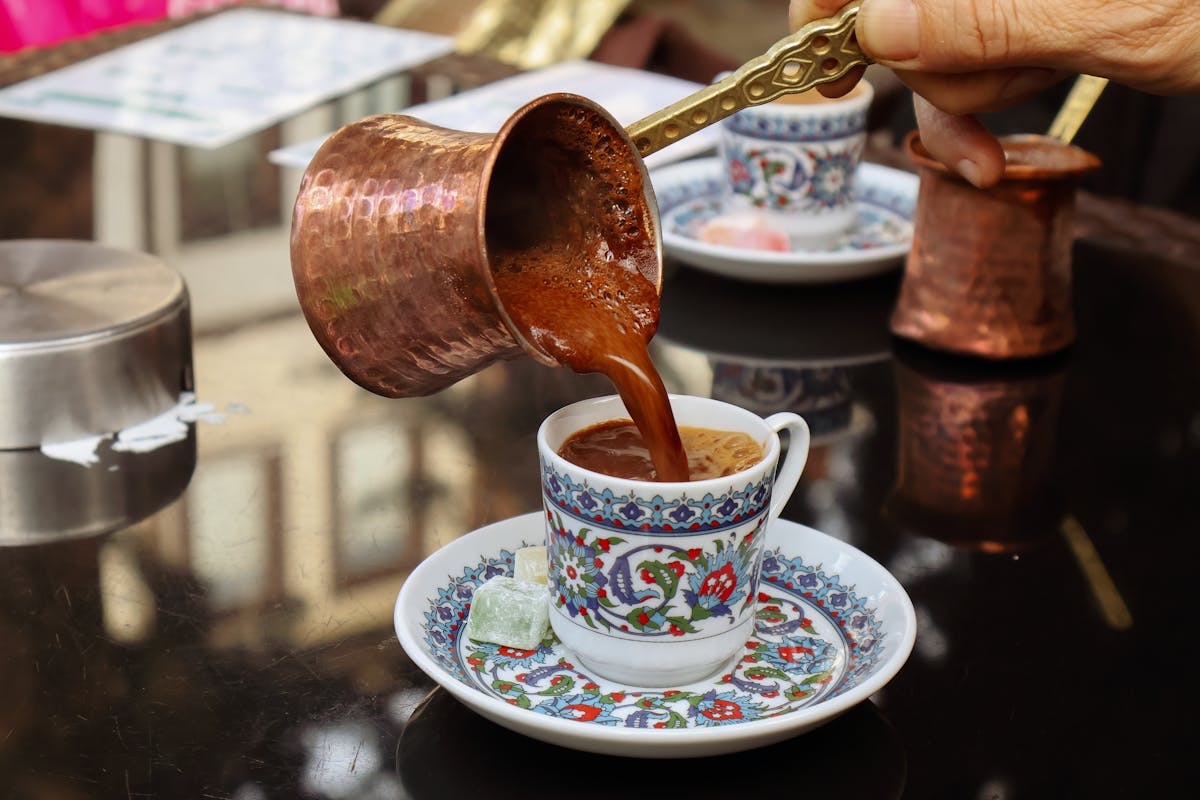
How to Make Turkish Coffee
The First Time I Made Turkish Coffee, I Realized It Was More Ritual Than Recipe
How to Make Turkish Coffee? I remember standing in my kitchen, holding a small pot and wondering why something so simple—coffee and water—felt so unfamiliar. I had brewed coffee in almost every modern way imaginable, yet this method felt different. Slower. More deliberate. Almost ceremonial.
When I finally tasted it, I understood why. Turkish coffee isn’t just about caffeine or flavor. It’s about texture, patience, and attention to detail. There’s no filter, no rush, and no room for distraction. Once I started respecting the process, the results became not only better, but more meaningful.
1. What Is Turkish Coffee? (A Method Rooted in Tradition)
Basic Definition
Turkish coffee is a brewing method where finely ground coffee is simmered in water, often with sugar, and served unfiltered.
Cultural Background
It dates back to the 16th century Ottoman Empire and remains a significant part of social and cultural rituals.
Key Characteristics
- Extremely fine grind (almost powder-like)
- Thick body with sediment
- Strong, concentrated flavor
A Deeper Insight
What struck me is that Turkish coffee doesn’t aim for clarity like modern brewing methods. It embraces texture and intensity instead.
2. Essential Equipment I Use (And Why It Matters)
Cezve (Ibrik)
A small pot, typically made of copper or stainless steel.
Coffee Grinder
Needs to produce a very fine grind, finer than espresso.
Heat Source
Traditionally sand or open flame, but a stovetop works well.
Demitasse Cups
Small cups, usually 2–3 oz, designed for serving.
A Practical Reflection
I’ve tried shortcuts, but the right tools make a noticeable difference, especially the grind consistency.
3. The Ideal Coffee-to-Water Ratio
Standard Ratio
- 1 heaping teaspoon (7–8g coffee) per 70–90 ml water
Example Batch
- 2 cups → 14–16g coffee + 140–180 ml water
Optional Sugar Levels
- No sugar (sade)
- Medium sugar (orta)
- Sweet (şekerli)
A Subtle Insight
Unlike other methods, sugar is added during brewing, not after. That small detail changes how the sweetness integrates into the coffee.
4. Step-by-Step: How I Make Turkish Coffee at Home
Step 1: Add Water
Measure cold water into the cezve.
Step 2: Add Coffee and Sugar
Stir thoroughly before heating.
Step 3: Heat Slowly
Place on low heat and avoid stirring once it begins warming.
Step 4: Watch the Foam
As foam forms (around 160–170°F), remove from heat briefly.
Step 5: Pour and Repeat
Optionally spoon foam into cups, then return to heat once or twice more.
Step 6: Serve Unfiltered
Pour carefully, allowing grounds to settle in the cup.
A Key Observation
The entire process takes about 3–5 minutes, but requires constant attention. It’s short, yet demanding.
5. Why Foam (Köpük) Matters More Than I Expected
Indicator of Quality
A thick foam layer signals proper technique.
Flavor Contribution
Foam carries aromatic oils, enhancing the sensory experience.
Serving Tradition
Foam is often divided evenly between cups before pouring the rest.
A Personal Realization
At first, I thought foam was just visual. Over time, I realized it’s actually part of the flavor structure.
6. Common Mistakes I Learned the Hard Way
Using the Wrong Grind Size
Anything less than powder-fine results in weak extraction.
Heating Too Quickly
High heat destroys foam and creates bitterness.
Stirring During Brewing
Disrupts the formation of foam.
Letting It Boil Over
Leads to harsh flavors and a messy stovetop.
A Practical Insight
Most mistakes come from impatience. Turkish coffee rewards slowing down more than anything else.
7. Flavor Profile and What to Expect
Taste Notes
- Strong and bold
- Slightly bitter
- Rich and earthy
Texture
Thick, with noticeable sediment at the bottom.
Caffeine Content
One small cup (~2 oz) contains about 50–65 mg of caffeine.
A Counterintuitive Thought
Despite its intensity, Turkish coffee isn’t necessarily harsher than espresso—it just expresses its strength differently, through texture rather than sharpness.
8. Final Thoughts: Turkish Coffee Is Less About Speed, More About Presence
After making Turkish coffee multiple times, I’ve realized something unexpected.
It’s not the most convenient method. It’s not the fastest. And it doesn’t produce the cleanest cup. But that’s exactly the point.
In a world where everything is optimized for speed, Turkish coffee asks me to slow down. To pay attention. To engage with the process instead of rushing through it.
There’s also a quiet contradiction here. The drink itself is small—just a few ounces—but the experience around it feels expansive. It creates space, even in a busy day.
And maybe that’s why I keep coming back to it. Not just for the taste, but for the pause it creates.
FAQs
1. What makes Turkish coffee different from regular coffee?
It is unfiltered, uses extremely fine grounds, and is brewed directly in water.
2. How fine should Turkish coffee grind be?
Almost powder-like, finer than espresso.
3. Can I make Turkish coffee without a cezve?
Yes, but results are better with a traditional cezve.
4. How much caffeine is in Turkish coffee?
Around 50–65 mg per small cup (2–3 oz).
5. Should I stir Turkish coffee while brewing?
Only at the beginning, not during heating.
6. Why is there sediment in Turkish coffee?
Because it is unfiltered and grounds settle at the bottom.